Introduction:
Do you recall that truism which says that the boundaries of your worldviews are limited to the borders of your exposures?
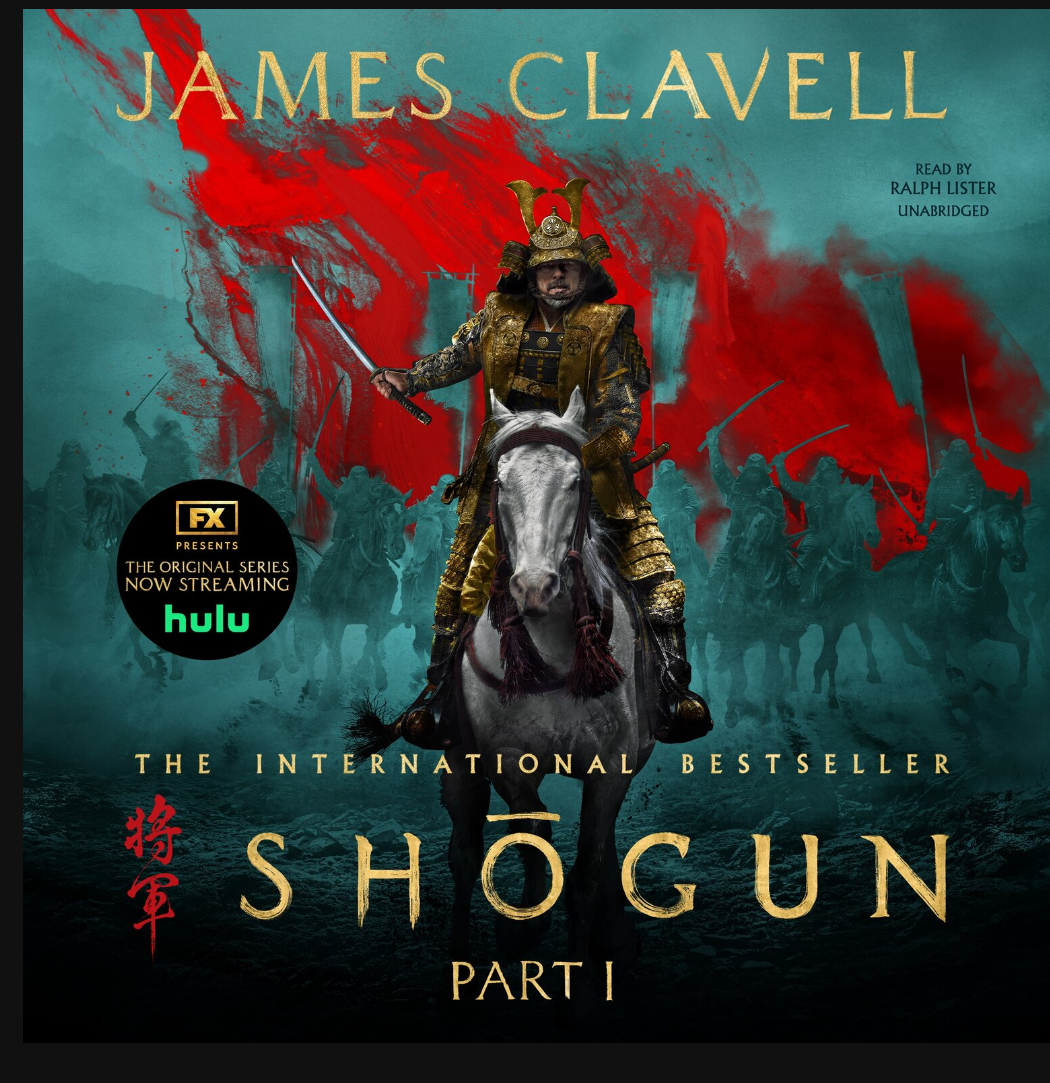
Well, come along as we review this audiobook I finished listening to only yesterday.
A Book That Doesn’t Just Tell a Story. It Pulls You Into a Collision of Worlds.
James Clavell’s Shōgun is one of those rare novels that refuses to sit quietly on your shelf.
A historical epic. An absolute adventure. But more than anything, it is a cultural interrogation disguised as fiction.
Published in 1975, the book is set in 17th‑century Japan, at the tail end of the Azuchi–Momoyama period and on the cusp of the Edo era; a moment when Japan was politically volatile, culturally rigid, and fiercely protective of its identity while being encroached upon by the Catholic church.
Clavell drops you straight into this world with a cinematic opening:
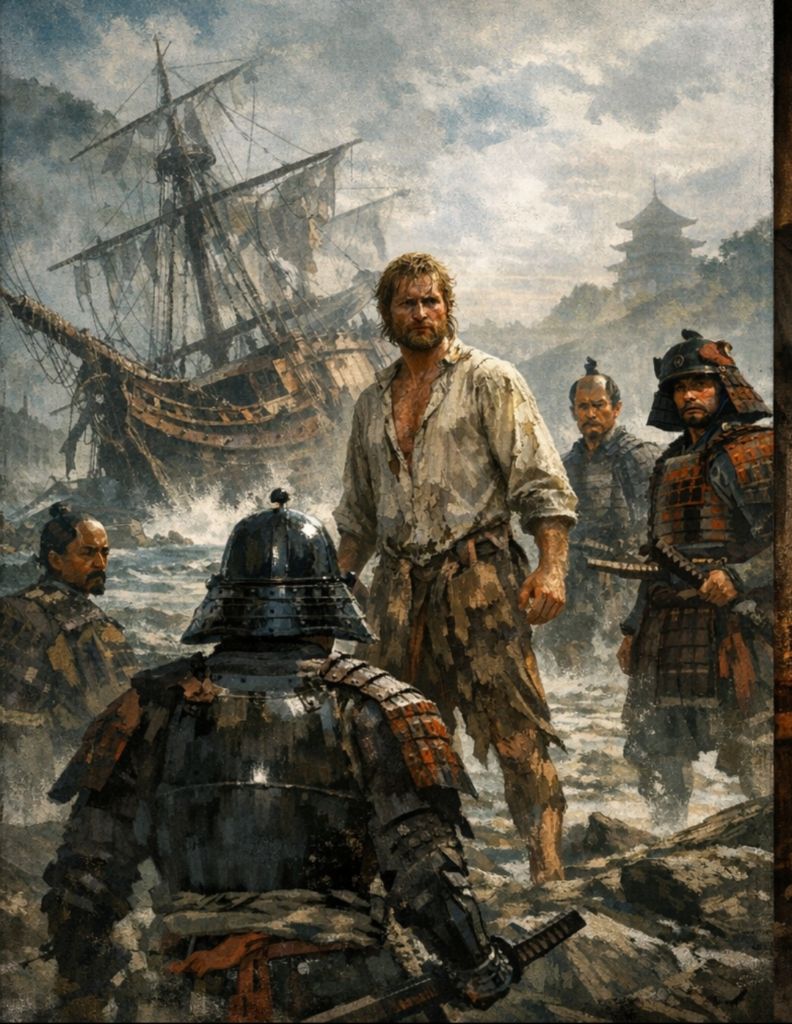
a Dutch merchant ship, The Erasmus, is battered by a storm, wrecked, and spat out onto the shores of a land no Englishman has ever entered.
John Blackthorne, the navigator, a stubborn Englishman wakes up from the oblivion of the wreck only to find himself and his surviving crew captives of the Japanese.
From that moment, the book stops being a story and becomes an immersion.
A confrontation.
A mirror.
Because as Blackthorne stumbles into this new world, barefoot, bewildered, and utterly ignorant ….Clavell uses him to expose the assumptions, prejudices, and blind spots that shape every culture.
And that, my dear reader, is where the lessons started for me.
1. Culture Is a Lens – and Most of Us Are Half‑Blind
Clavell doesn’t politely suggest that cultures misunderstand each other.
He demonstrates it with brutal clarity.
To the Japanese, Blackthorne is a barbarian – a giant with golden hair, translucent skin, and a face that reveals every emotion. While to the English, the Japanese are ‘savages’ who bathe too much and are not embarrassed by nudity, eat ‘strange’ food, and walk around in kimonos without shame.
Both sides are convinced of their own civilisation.
Both sides are wrong.
Blackthorne’s horror at being forced to bathe, followed by his reluctant pleasure is almost comedic. But it’s also symbolic.
He misses that he comes from a society where washing once a week is normal. So he refuses the assertion that he smells. Whereas Japan thrives on purity, order, and not inconveniencing others.
Clavell’s point is sharp:
your worldview is not universal; it is simply familiar.
Everything outside feels threatening until you learn better.
“Culture is a Peoples’s way of life”
English Saying
2. Interests, Not Ideals, Shape Alliances:
If you walk into Shōgun expecting noble alliances built on shared values, Clavell will quickly disabuse you of that fantasy.
In this world, interests rule everything.
Jesuits manipulate daimyōs (feudal lords) to protect their trade monopoly.
Warlords switch loyalties like changing robes.
Blackthorne and Rodrigues (a Portuguese sailor) — natural enemies by nationality and religion — find common ground only because they both despise the Spanish.
Even within the Catholic Church, the Jesuits persecute other orders.
So much for unity in Christ.
Clavell exposes a truth we often pretend not to know:
people don’t unite over principles; they unite over threats.
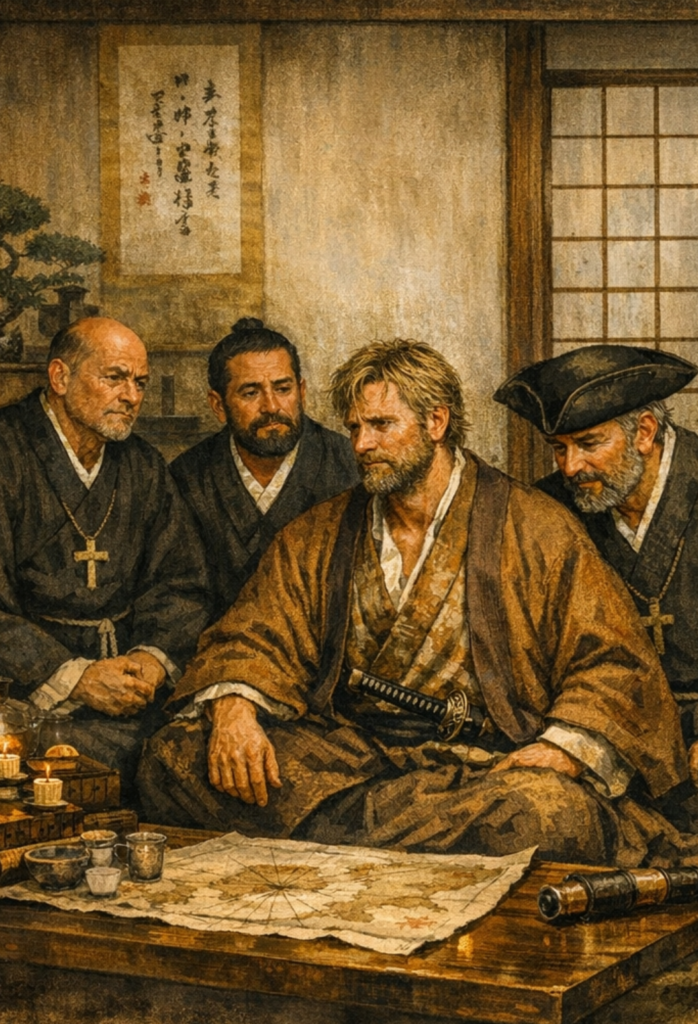
“In the face of a common foe enemies become friends”
Idiom
3. Honour Is Not Universal – It’s a Cultural Currency
This is where the book becomes psychologically rich.
Blackthorne endures humiliation to save his crew. An act he sees as noble, while to the samurai, it is an unforgivable weakness.
Yet Toranaga, the political mastermind, sees something else entirely:
a man who can swallow shame, adapt, and survive.
A man who is dangerous precisely because he is flexible.
And thus, invaluable to him as a pawn
Rodrigues, too, refuses to kill Blackthorne despite religious orders.
Not because he is holy, but because he is human — and because sailors share a code older than any church.
Clavell forces you to confront the uncomfortable truth:
honour is not a universal virtue; it is a cultural invention.
—
“A pilot is a pilot. I won’t murder one”
Rodrigues
4. Colonialism Is Not a Side Plot — It Is the Monster in the Room
The most unsettling moment in the book, for me, is when Blackthorne explains Europe’s geopolitical ‘agreement’ to divide the world like a butcher divides meat.
Nations claiming lands they’ve never seen. Priests hiding maps to keep Japan ‘undiscovered’ and protect their trade. Empires rewarding ‘explorers’ for invading peaceful societies.
I was surprised to find that it rankled because it is familiar. With what I know about history, I expected it not to. But it did.
Because it is historical.
Because it is ongoing.
The Japanese are called savages and monkeys yet it is Europe that arrives with greed, entitlement, and the audacity to claim ownership of a land that isn’t theirs.
Clavell doesn’t romanticise it.
He exposes it.
—
Conclusion: A Story That Forces You to Look Again
Shōgun is not just a novel.
It is a confrontation with the limits of your worldview.
It reminds you that culture is fragile, power is manipulative, honour is subjective, and colonialism is always violent ….. even when wrapped in religion, trade, or ‘civilisation’.
And perhaps the most important lesson as Lady Mariko tells Lord Yabu towards the end while they discuss Blackthorne……..
no culture owns civilisation.
“I no longer see him as a barbarian like when he first arrived. He has opened my eyes to the world beyond Japan and China which I thought where the entire world”
Mariko San
Dear Reader,
Have you read this book or seen the movie?
Nay?
Does this review intrigue you enough to?
Discover more from amarannajiwrites
Subscribe to get the latest posts sent to your email.