
“Old man, are you still writing? I have to turn off the lights now.”
The guard barked the words with the insolence of someone newly assigned and eager to assert power.
“Give me a few minutes more and I’ll be done,” the prisoner replied gently.
“That’s what you said an hour ago. Everyone else is asleep, yet here you are, scribbling away. What are you writing anyway – your life story?” The jailor’s tone dripped with derision.
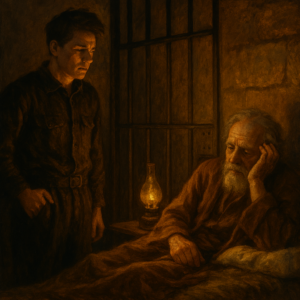
“Letters to my family. My sons and daughters.”
The guard snorted. “Your sons and daughters? Word around here is you never married. No wife. No children. Nothing.”
“I have a family,” the old man said, eyes returning to his ink and parchment. “I may not have sired them, but I birthed them.”
“Right. I’ve heard you’re a strange one.” The guard smirked, blew out the lamp, and left him in darkness.
The old man felt his way to his narrow bunk, careful not to knock over the ink bottle. Something hot and sharp stirred in his chest at the guard’s disrespect.
“Anger… is that you?” he whispered. “Not today. I am crucified with Christ; it is no longer I who live.”
He pulled the thin covers over himself, but sleep refused him. His mind swirled with unwritten letters — messages he needed to send before his time ran out. Between earning his keep through his craft and writing these letters, he feared he would not finish them before the hangman came.
“Lord, I need a little more time,” he prayed. “Just enough to pour out what You’ve placed in me.”
Tonight’s letter was nearly done. The courier – a young prisoner being released – would leave in two days. The old man needed him to carry this letter, because the young man’s life depended on it.
It was a plea. A personal appeal to the young man’s master — a man who was both a brother and a son to the old prisoner. Without the letter, the master had every legal right to kill the runaway on sight. But the old man was certain that once he read the message, mercy would rise in him.
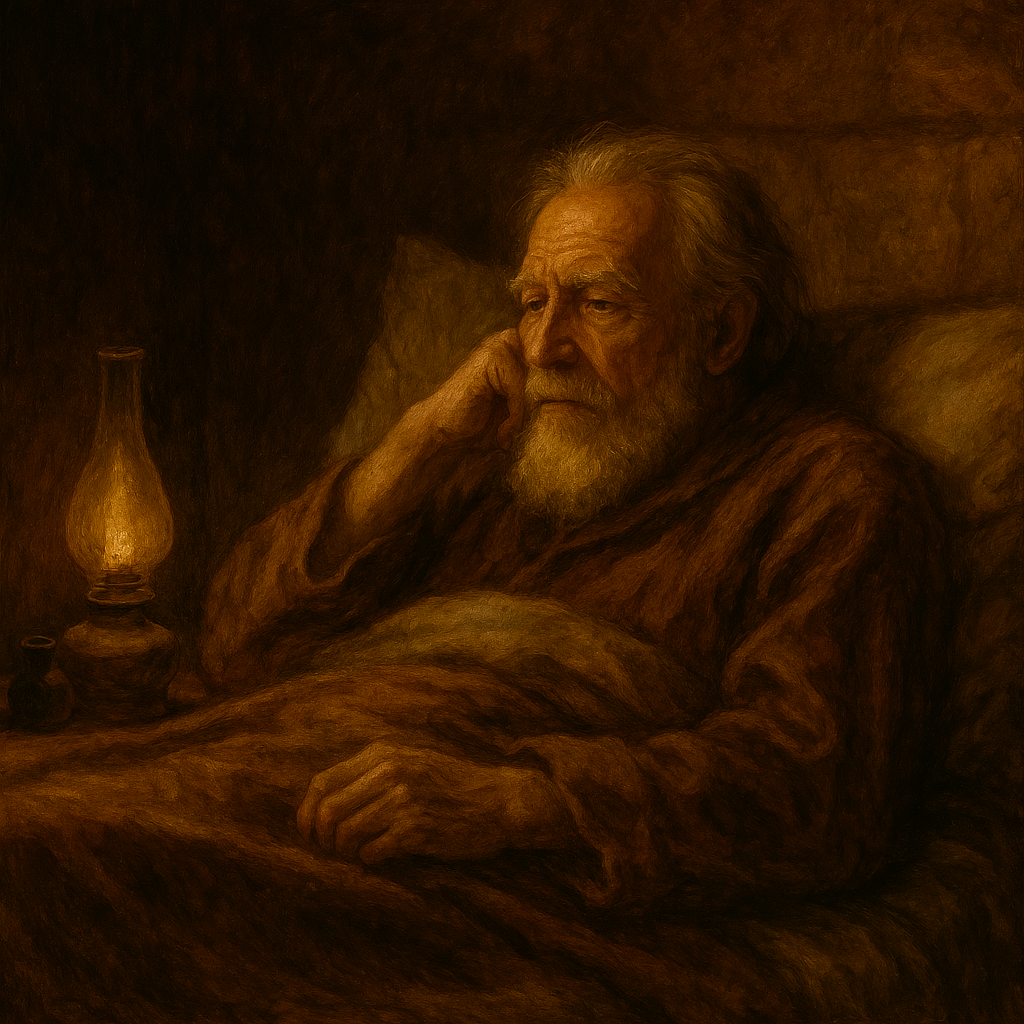
“And then there’s the payment I promised,” the old man sighed.
Business had been slow. Not because demand was lacking – his tents were renowned – but because imprisonment limited his ability to supply. Still, he had trained several inmates in the craft.
“One good I can leave behind,” he had told the warden, “is equipping these men with a skill. Many return here because they have nothing to offer the world outside. But with this, they can earn an honest living.”
Paul
The warden had agreed, and the classes began. But lately, the old man had spent more time writing letters than supervising his apprentices. Stock was low. Income was thin.
“Lord, how will I repay Philemon what Onesimus owes him?” he murmured. “I cannot burden the Macedonians again. They have already given beyond measure.”
As sleep finally tugged at him, he thought he felt someone lie beside him — a presence, familiar and steady.
“My grace is sufficient for you, Paul.
- Reflection Prompt for Readers
Before you leave this story, pause for a moment.
Think about the “letters” in your own life — the words, apologies, blessings, or instructions you’ve been carrying in your spirit but postponing.
Who is waiting for something only you can say?
And what might shift if you offered it now, while there is still time?
Author’s Note
This story came to me the way many of our elders’ tales do — quietly, like someone pulling a stool beside you and saying, “Let me tell you something small.” I found myself imagining Paul not as a distant apostle, but as one of our old uncles who has seen life, suffered well, and still carries enough love to write long into the night.
In my mind, he became that familiar figure: the man who has no biological children but somehow fathers whole communities; the one who teaches skills, settles quarrels, and writes letters that save people’s lives. That image felt deeply Nigerian to me — deeply diasporic too — the way we hold on to people, mentor them, claim them as family even when blood says otherwise.
From that place, the story began to breathe and gave birth to this first story https://amarannaji.com/philemon-reimagined-the-most-daring-return-in-the-new-testament/.
Further Reading:
- Philemon
- Ephesians 4:28
- Philippians 2:25
- 1 Corinthians 4:12
- 2 Corinthians 12:9
- Philippians 3:17
Discover more from amarannajiwrites
Subscribe to get the latest posts sent to your email.