
Many of us want God to fight our battles, but we don’t want to take the first step. We crave divine intervention without personal participation. Yet Scripture keeps whispering (and sometimes shouting) a different truth: God fights for us, but He rarely fights without us.
1. Setting the Scene: A Battle Bigger Than the Kings of Judah and Israel
King Jehoshaphat is one of my favourite biblical kings. If you overlook his questionable “collabos” — alliances that nearly cost him his life — you’ll find a man with a steady head and a sincere heart.
(If you’re curious about those alliances, check out his near‑fatal partnership with King Ahab in 1 Kings 22, and his later entanglement with King Ahaziah in 2 Chronicles 20:35–37.)
But the story that grips me most is in 2 Chronicles 20. Jehoshaphat was minding his business, catching a breather from state affairs, when trouble came pounding on his door. A breathless military guard arrived with a message no king wants to hear:
“Three nations are marching against us. Their armies are like the sands of the sea. We could be swallowed up, and no one would notice.”
A crisis of overwhelming proportions.
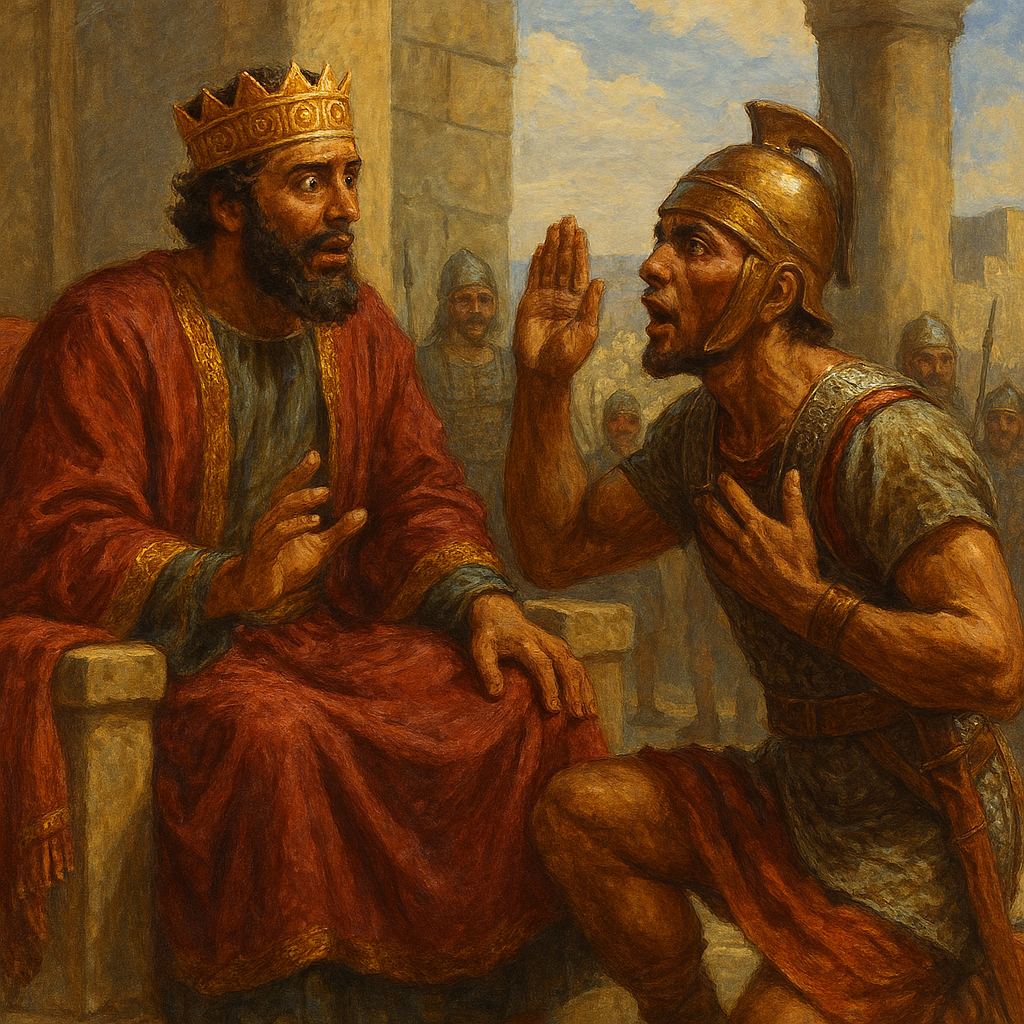
The guard delivers the seemingly bad news
. God’s Assurance: “The Battle Is Not Yours, but Mine”
Jehoshaphat was terrified — Scripture says so plainly. And in his fear, he did something remarkable:
- He sought the Lord.
- He proclaimed a fast.
- He gathered the entire nation — men, women, children.
- And as my mother would say, “When things get that serious, even the animals fast.”
Jehoshaphat knew the stories of God’s power. He had grown up on tales of deliverance. So why didn’t he simply roll over and sleep, trusting God to handle it?
Why fast?
Why pray?
Why mobilise the people?
Was he trying to help God?
No. Jehoshaphat understood something many of us miss.
3. The Hidden Condition: They Still Had to March Out
I grew up hearing, “The battle is the Lord’s.” But my childhood environment — shaped by conflict‑averse adults — taught me to interpret it as:
“God will fight for you, so stay quiet and don’t cause trouble.”
That mindset sabotaged me for years.
This is the danger of habituation: becoming so familiar with a truth that you stop seeing it clearly. Children raised in faith often inherit interpretations rather than understanding.
Only when I began questioning my beliefs did I realise the fuller picture:
“God is with you — so stand firm and speak up.”
“God fights — so I fight too.”
Inaction is also an action. A choice. A decision. With consequences.
Jehoshaphat understood this. So when God finally spoke, the message was clear:
“The battle is Mine, not yours.
But you must go out.
Stand firm. Hold your position.
Then watch Me show off.”
Victory was promised — but participation was required.
4. Faith in Motion: Why Showing Up Activates God’s Intervention
When this truth finally clicked for me, it felt like a box‑dye revelation: the colour only works when you mix the activator with the crème.
God’s promise is the crème.
Your obedience is the activator.
Showing up looks different in every situation, but the principle is the same: movement unlocks miracles.
5. When We Want Miracles Without Movement
Think back to your childhood. How did your caregivers handle conflict?
- “God will fight — so avoid confrontation”?
- “God will fight — so God endorses my fight”?
Both shape how we interpret faith, courage, and responsibility.
Which one produced healthier outcomes in the long run?
6. Practical Ways to ‘Show Up’ in Your Own Battles
Scripture is full of people who activated divine intervention by taking the first step:
- Blind Bartimaeus shouting until Jesus stopped (Mark 10:46–52)
- The woman with the issue of blood pushing through the crowd (Luke 8:43–48)
- Tamar securing her future through bold, unconventional action (Genesis 38)
- Gideon showing up with only 300 men (Judges 6–7)
For Jehoshaphat, showing up meant:
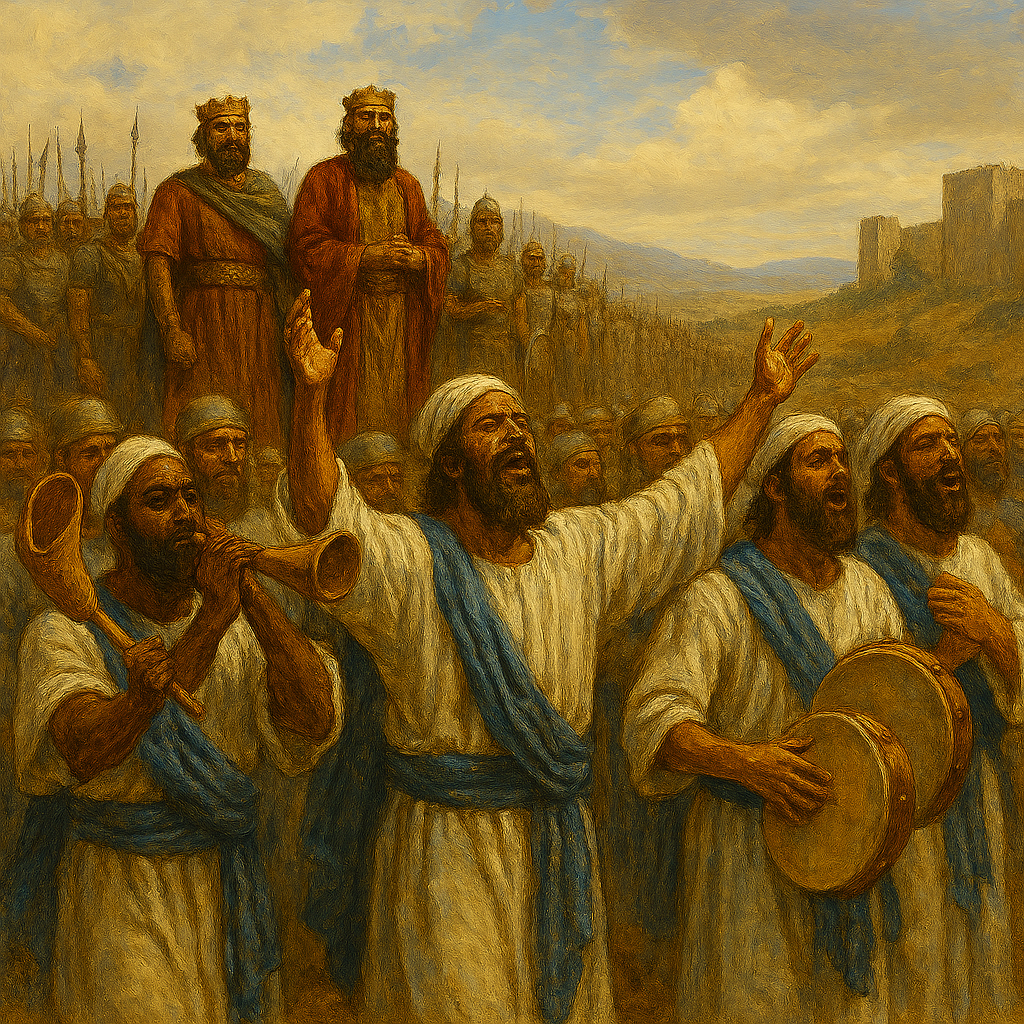
- Marching out to battle with an army instructed to put down their weapons
- Sending Levites ahead to sing, praise, and recount God’s power
For me, showing up has meant learning that:
“Be still and know” is not the same as “Good Christians don’t make trouble.”
Closing Reflection: Courage Is a Form of Worship
Trust is not passive. It is an active posture — a stance, a readiness, a willingness to step forward even when the odds are stacked against you.
As Christians who claim to worship a God whose breath can split mountains, perhaps we need to stop living like timid caretakers of a caged dragon.
afterall, what use is a dragon that never breathes fire?
If this theme resonates with you, you may appreciate this modern take on the battles we face today and how faith becomes active when we choose to show up.https://psychnewsdaily.com/12-spiritual-battles-every-believer-faces-and-how-to-win/
Also, here is a previous story I wrote on one of King Jehoshaphat’s alliance which almost took him out https://amarannaji.com/beware-of-that-greek-gift/
Discover more from amarannajiwrites
Subscribe to get the latest posts sent to your email.