Madam Short Nose The Pretender:
Do you follow the Bible Project on YouTube? I follow them in the YouVersion Bible App where I learn the etymology of some Bible terms in Hebrew. And sometime last year or so, I came across a video. It explained that the word ‘nose’ is translated ‘aph’ in Hebrew.
Therefore, a patient person, is termed ‘erik apayam’ which = long of nose while a quick-tempered person is called short of nose.
The video explained what it means when we describe God as ‘slow to anger’ {Long Nosed}. My son began calling me short nose.
Later, we agreed to have a code. When I flare up unnecessarily, he would say the words ‘Long Nose’. I admit that I am still a Work In Progress.
However, one benefit which came out of his constant monitoring of me, was the ability to start digging into my roots. Where did this anger stem from? What am I angry about?
The Excavation:
I did not have to dig deep to reach my roots. There on the surface they lay, dumped there by my parents. A shocker for me, considering that I did not spend my formative years with them.
How then could I have picked up their patterns?
Now to my parents, my father was your quintessential gentleman. Always willing to let you have the last word and quick to walk away from conflict. But he carried a simmering anger inside which blazed in his interactions at home.
My mother? the reverse. She would race headlong as the conflict approached……..never the aggressor but never the first to back down. And she was constant throughout her interactions – marketplace, church, neighbourhood.

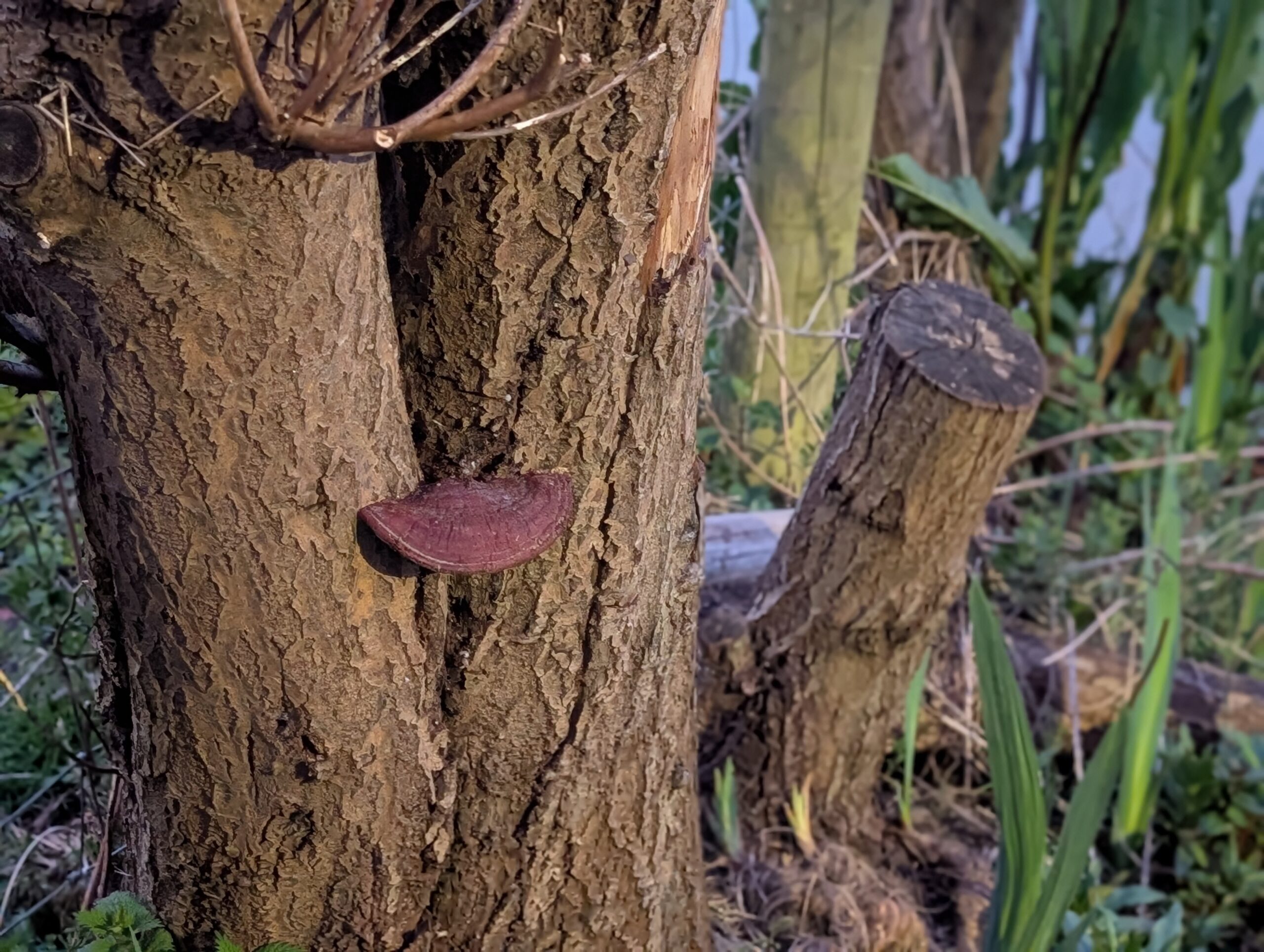
I could not resist taking a photo of the new day
Thanks to my son, my excavations revealed a lot about why they both turned out that way. And shocker of all shocks, I had become them. Two-faced though. Unfazed during one interaction and erupting during another. Something which my son terms a pretence.
As I continue to accept his feedback, an idea struck me. How do we end up exhibiting those same traits we detested in our parents?
The Still Small Voice at Dawn
At dawn today, while on a Prayer Walk and mulling over it, an idea came to me.
We Africans, constantly pray against the idols of our fathers’ houses. We engage in spiritual exercises, binding and casting the demons which allegedly contend against our progress and tie us down
But what if you are your own demon? What if the weapons of our warfare are simply self-awareness and personal development?
Could we, by digging into our roots, assessing the issues and finding help, prevent us from becoming like our parents s we age?
As I walked back into the house in that quiet morning, I heard the words drop in my spirit – just like Gideon.
“Gideon?” I cocked my head “Gideon was a mighty man of valour. Wasn’t he that insecure dude with low self-esteem who eventually became a military commander, judge and prophet?”
“He was the visionary youth who destroyed the idols of his father’s house but will eventually lead Israel into idolatry in his old age”. I heard. Then the wheels in my head began to churn.
There I was mulling over my own issues, and there was a Bible hero who faced similar challenges. Times like this make me grateful for the Life Manual called the Bible.
MEET GIDEON BEN JOASH: The Man Who Became What He Tore Down
Judges 8:22–27
Gideon began his journey by destroying his father’s idol, yet he ended his life by building one of his own.
It’s one of the most sobering turns in Scripture.
The man who tore down Baal’s altar eventually erected an ephod that became a snare to Israel.
And this is where the story becomes painfully human.
🌾 1. Deliverance Doesn’t Erase Our Background—It Reveals It
Gideon grew up in a household where idols were normal.
He hated it.
He challenged it.
He risked his life to dismantle it.
But the patterns of our upbringing don’t disappear simply because we reject them. They lie dormant, waiting for moments of:
- fatigue – this was my mother
- pride
- success
- unhealed wounds – this was my father
Gideon’s ephod wasn’t a rebellion. It was unhealed history resurfacing.
Sometimes the very thing we fight hardest against is the thing we are most vulnerable to repeating.
🔍 2. Self-Sabotage Often Looks Like “Good Intentions”
Gideon didn’t set out to lead Israel into idolatry.
He wanted a memorial, a spiritual symbol, a reminder of victory. By this time, he had gone from that timid man hiding inside the winepress to an accomplished Statesman
But self-sabotage rarely announces itself as destruction.
It often comes disguised as:
- “I’m just trying to help.”
- “I deserve this.”
- “This is harmless.”
- “I’m not like them.”
Gideon’s downfall wasn’t rebellion—it was blindness. He didn’t see how his unresolved past shaped his present decisions.
Self-sabotage is often the fruit of unexamined wounds. My excavation dug up some rotten roots held by band-aids.
🧬 3. What We Don’t Heal, We Repeat
Gideon’s story is a mirror for anyone who has ever said:
- “I’ll never be like my parents.”
- “I’ll never repeat that mistake.”
- “I’ll never raise my children the way I was raised.”
Yet without healing, reflection, and surrender, we often recreate the very environments we escaped. Humbling enough, it does not matter that sometimes, we have ‘done better’ than our parents, in terms of education and exposure.

Cut the tree, but the trunk remains. What source feeds your trunk?
Why?
Because pain has a memory, and unhealed patterns have a way of resurfacing in moments of vulnerability.
Gideon’s ephod teaches us that:
- Deliverance is instant
- Transformation is lifelong
- Patterns require intentional uprooting
And being intentional means constantly looking in the mirror and daily renewing your mindset
🔥 4. God Uses Us Despite Our Background—But He Also Wants to Heal It
God didn’t reject Gideon.
He used him powerfully.
But God also wanted to heal the parts of Gideon that fear, insecurity, and family history had shaped.
Gideon accepted the calling but never fully surrendered the wound. And that wound shaped his legacy.
God’s desire is not just to use us—it is to restore us.
But be ye transformed by the renewing of your mind
Romans 12:2
🌿 5. The Invitation: Tear Down the Idol Within
Gideon, like you and I, tore down the idol in his father’s house.
But he never tore down the idol in his heart:
the need for significance, validation, and control.
Our modern idols may not be carved from wood, but they are just as powerful:
- the idol of approval
- the idol of success
- the idol of proving we’re different from our parents
- the idol of showing that we have power over others
- the idol of being needed
The call of God is not simply to destroy external idols but to confront the internal ones that quietly shape our choices.
Back inside my house, I sat and pondered. Such a huge lesson from an unexpected place. All were activated because a child dared to call out my pretence. And all before daybreak, I had gone through a masterclass on taking personal responsibility for self transformation, instead of blaming the idols in my father’s house.
Finally, as I sign out, I leave you with this prayer below:
🙏 Reflection Prayer
Lord, reveal the patterns in me that echo the wounds of my past.
Heal the parts of me that sabotage my own calling.
Break every cycle that I have unknowingly carried forward.
Give me the courage to confront not only the idols around me, but the ones within me.
Make me whole, so that what I build brings people closer to You, not away from You.
Amen.
Discover more from amarannajiwrites
Subscribe to get the latest posts sent to your email.